

The most secure way to fix your new outdoor structure isn't actually to the decking boards you see, but to the hidden framework beneath them. If you're wondering how to anchor a pergola to decking, you're likely caught between the desire for a flawless finish and the fear of a structural failure during a fierce UK storm. It's a valid concern. With 19% of homeowners prioritising decking and patios in 2026, creating a safe, stylish space has never been more important.
You want your aluminium pergola to feel like a permanent, sophisticated extension of your home, not a temporary fixture that keeps you awake during a gale. We understand the anxiety of drilling into expensive timber or composite, which is why we have simplified the professional approach for you. By the end of this guide, you'll know exactly how to achieve a rock-solid installation that protects your investment and your peace of mind.
We will explore the vital distinction between surface mounting and joist mounting, clarify the confusion over bolt types, and provide a step-by-step roadmap to a wind-resistant sanctuary. You're about to transform your deck into a high-end retreat with the confidence of a master builder.
Key Takeaways
- Understand the physics of wind uplift and why your deck's hidden framework is more important than the surface boards for structural safety.
- Identify the professional-grade hardware required for how to anchor a pergola to decking, focusing on why marine-grade stainless steel is the only choice for long-term durability.
- Master the gold-standard "Structural Blocking" technique to secure your aluminium sanctuary directly to the deck joists for maximum wind resistance.
- Learn precision drilling methods that ensure a professional finish while protecting any sub-deck utilities from accidental damage.
- Discover how to maintain your structure's integrity year-round by managing roof settings and performing simple seasonal bolt checks.
Assessing Your Deck's Structural Integrity for a Pergola
Building a sanctuary on your deck starts with a thorough inspection of what lies beneath your feet. While you might be focused on the sleek lines of your new aluminium structure, the success of your project depends on the skeleton of your deck. Understanding fundamental deck construction principles is the first step to ensuring your structure remains a permanent fixture of your home. You must verify that the timber frame is free from rot and that the joists are spaced correctly, typically at 400mm or 600mm centres, to provide a consistent mounting surface.
Aluminium pergolas are significantly lighter than traditional timber alternatives, which makes them easier to handle during assembly. However, this reduced weight means they require more intentional anchoring to resist the forces of nature. Beyond the weight of the frame, you must factor in the total load of your lifestyle upgrades. Adding an infrared heater, integrated LED lighting kits, or heavy-duty side screens increases the pressure on your decking. A professional-grade installation accounts for these additions from day one, ensuring your deck can support both the static weight and the kinetic energy of daily use.
The Difference Between Surface Weight and Wind Load
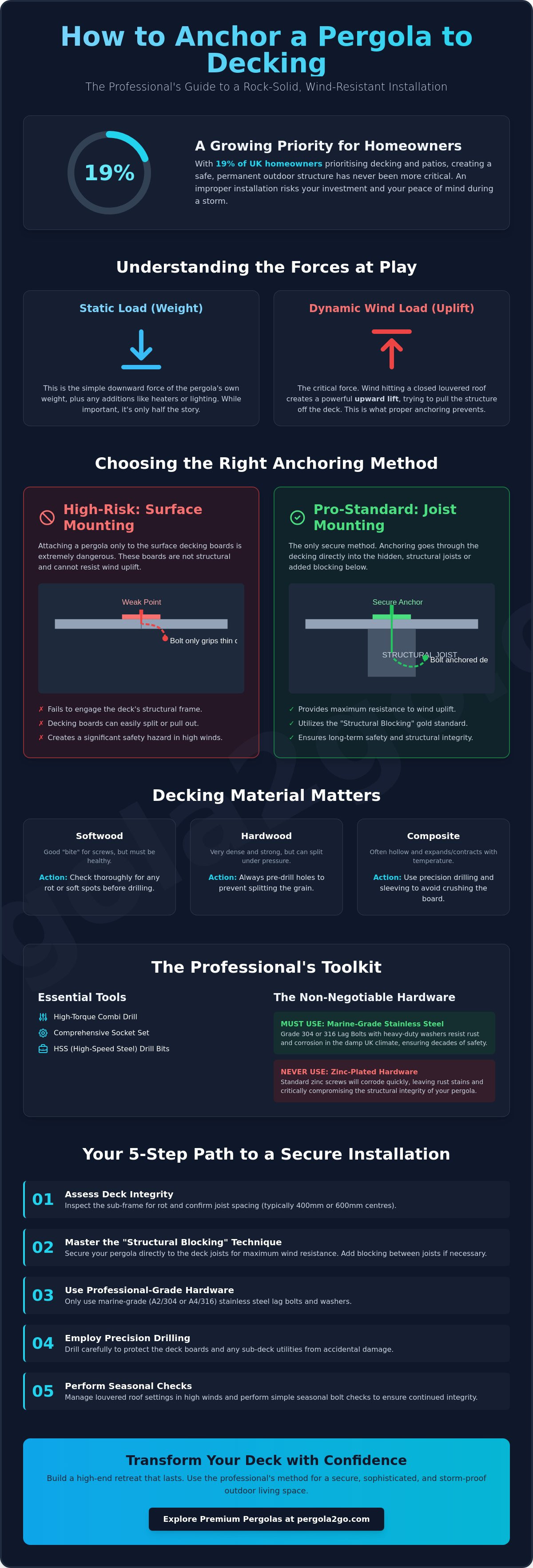
There is a vital distinction between static load and dynamic wind load. Static load is simply the weight of the pergola sitting still. Dynamic load is the force applied when a UK gale hits the structure. Because our premium aluminium frames feature sophisticated louvered roofs, they can act like a sail when closed. This creates an "uplift" force that tries to pull the pergola off the deck. Learning how to anchor a pergola to decking correctly involves preparing for these upward forces, not just the downward weight. Our engineered frames are designed to distribute this energy efficiently, but they must be tied into the deck's primary structural members to be effective.
Identifying Your Decking Material: Wood vs. Composite
The material of your deck dictates your technical approach. Softwood and hardwood offer excellent "bite" for structural screws, provided the timber is healthy and dense. Composite decking requires a more nuanced touch. Many composite boards are hollow or have "scalloped" bottoms, meaning they lack the internal density to hold a heavy-duty bolt on their own. Additionally, composite materials expand and contract significantly in the sun. When securing a pergola to these surfaces, you often need to install internal reinforcement or "sleeving" to ensure the anchor reaches the structural timber joist below without crushing the decorative surface board.
- Softwood: Requires checking for soft spots or water damage before drilling.
- Hardwood: Often needs pre-drilling to prevent the dense grain from splitting.
- Composite: Demands precision to account for thermal expansion and potential hollow cores.
Essential Tools and Hardware for Deck Mounting
Precision is the hallmark of a luxury installation. To master how to anchor a pergola to decking, you must move beyond the basic toolkit found in a kitchen drawer. A professional-grade transformation requires high-performance equipment that respects the integrity of both your aluminium frame and your timber substructure. Before you begin, ensure you have a high-torque combi drill, a comprehensive socket set, and HSS (High-Speed Steel) drill bits specifically for the aluminium footplates. Having the right kit on hand ensures the process is smooth, efficient, and rewarding.
Don't settle for standard zinc-plated screws. In the damp UK climate, these will eventually corrode, leaving unsightly rust streaks and compromising your safety. Grade 304 or 316 stainless steel is non-negotiable for garden structures. These materials resist oxidation and maintain their structural strength for decades. For those seeking a deeper understanding of load-bearing connections, this expert guide to building a pergola provides excellent context on structural fasteners. This attention to detail is what separates a temporary addition from a permanent lifestyle upgrade.
Bolts, Screws, and Fasteners: The UK Standard
Lag bolts are the gold standard for deck mounting. They offer incredible pull-out resistance, ensuring your structure stays put when the wind picks up. Always pair them with heavy-duty washers. These small components prevent the bolt head from sinking into the timber, maintaining a firm grip on the baseplate. If you're reinforcing your deck with internal blocking, structural timber screws are your best friend. They provide the grip needed to turn a standard deck into a rock-solid foundation for your aluminium pergola.
Measurement and Precision Tools
A perfectly upright structure is the difference between a sleek modern aesthetic and a crooked disappointment. While a spirit level works for small tasks, a laser level offers unmatched accuracy across long spans. Use a chalk line to mark the exact footprint of your posts. This ensures every baseplate aligns perfectly before the first hole is drilled. Knowing how to anchor a pergola to decking with precision saves time and prevents costly mistakes. Remember the golden rule: measure twice, drill once. Aluminium is unforgiving, so your initial markings must be flawless to ensure a professional-looking finish.
Safety gear is equally vital for a successful project. Wear impact-resistant goggles when drilling metal to protect against sharp aluminium shards. Always have a second pair of hands available for the heavy lifting. This keeps the assembly process safe and enjoyable, allowing you to focus on the excitement of your garden's transformation.
Choosing the Right Anchoring Method: Surface vs. Joist Mounting
Deciding on a mounting strategy is the most critical technical choice you'll make. While the aesthetic of your deck is important, the structural connection beneath the surface determines whether your sanctuary remains secure during a coastal gale. Many amateur guides suggest simply screwing into the deck boards, but this is a mistake that risks both your decking and your safety. To truly master how to anchor a pergola to decking, you must look at the skeleton of your outdoor space. A professional installation ensures the forces of wind and weight are transferred directly into the primary structural members of the deck.
Direct-to-board mounting is rarely acceptable for a high-quality aluminium pergola uk homeowners invest in. Standard decking boards, whether timber or composite, are usually only 25mm to 32mm thick. They lack the "meat" required to hold a heavy-duty anchor bolt against significant uplift. This method should only be considered if you are installing a very small, decorative structure in an exceptionally sheltered area. For everyone else, the goal is to reach the joists.
The Structural Blocking Technique Explained
Structural blocking is the gold standard for securing a pergola to an existing deck. This involves adding short lengths of timber, often 4x2 or 6x2 "noggins," between your existing joists directly under the post locations. By creating this solid mass of wood, you provide a deep, secure foundation for your lag bolts to bite into. If you can access the underside of your deck, this is a straightforward upgrade. You simply measure the post footprint, cut the timber to fit snugly between joists, and secure them using structural timber screws. This creates a rock-solid mounting point even if your pergola post doesn't perfectly align with an original joist.
Comparison: Which Method Suits Your Garden?
Selecting the right approach depends on your specific environment and the height of your deck. Use the table below to determine which path offers the best balance of effort and security for your project.
| Method | Security Level | Effort Required | Best For... |
|---|---|---|---|
| Surface Mounting | Low | Minimal | Small, sheltered decorative structures. |
| Structural Blocking | High | Moderate | Most residential aluminium pergolas. |
| Joist-Direct | Maximum | High | High-wind areas and large free-standing units. |
If your post lands directly over a joist, you have the ideal scenario. You can use through-joist anchoring, where a long bolt passes through the decking and the entire depth of the joist. This provides the ultimate level of security. However, since modern deck layouts rarely match pergola footprints exactly, blocking remains the most versatile and reliable solution for the savvy DIYer. Knowing how to anchor a pergola to decking using these professional techniques ensures your outdoor lifestyle remains uninterrupted, regardless of the British weather.
Step-by-Step: How to Anchor Your Pergola to Decking
The transition from planning to physical installation is where your vision for an elevated lifestyle becomes a reality. Now that you have assessed your deck's integrity and selected your hardware, it's time to execute the build with precision. Following a structured process ensures that every bolt and bracket contributes to a safe, vibration-resistant sanctuary. This phase requires focus and a steady hand, but the reward is a professional-grade finish that looks as though it was integrated into your home's original architecture. Accuracy here is the secret to how to anchor a pergola to decking so it withstands years of use.
Phase 1: Alignment and Pilot Holes
Begin by positioning the footplates for your garden pergolas exactly where they will sit. Use your chalk lines to verify that the structure is perfectly square. This is vital because even a few millimetres of misalignment can cause "racking," where the frame leans or feels unstable. Once aligned, drill pilot holes through the decking and into your structural blocking or joists. Using a bit slightly smaller than your lag bolt prevents the timber from splitting, which is especially important for aged or very dry wood. This simple step preserves the structural health of your deck for the long term.
Phase 2: Bolting and Reinforcing
Insert your stainless steel bolts through the baseplate and into the pre-drilled holes. If you have access to the underside of the deck, apply a heavy-duty washer and nut to create a "through-bolt" connection for maximum security. When tightening, always work in a cross-pattern. This technique distributes the pressure evenly across the aluminium footplate and prevents the post from tilting. Tighten until the plate is flush with the deck, but avoid over-torquing, which can crush the wood fibres or damage composite boards. After the first post is secured, give it a firm push to check for any immediate movement before proceeding to the next corner.
Phase 3: Weatherproofing the Connection
Moisture is the enemy of any timber structure. To prevent "deck rot" at the anchor points, apply a generous bead of high-quality silicone sealant into each bolt hole before the final tightening. This creates a watertight barrier that stops rain from seeping into the core of your joists. Once the structure is locked down, install the decorative foot covers provided with your kit. These hide the industrial hardware, providing a sleek and sophisticated finish. Perform a final "shake test" by applying pressure to the posts. A correctly anchored louvered roof structure should feel like a solid part of the deck with zero play or rattling.
Ready to upgrade your outdoor living space with a structure designed for durability and style? Explore our range of premium aluminium pergolas and find the perfect fit for your home.
Ensuring Year-Round Stability and Longevity
Your outdoor sanctuary should remain as solid in year ten as it was on day one. While a premium aluminium frame requires virtually no maintenance, the timber deck it sits on is a living material that reacts to the environment. Timber naturally expands and contracts with the changing UK seasons, which can lead to slight shifts in the tension of your fasteners. Proactive care is the secret to a structure that feels permanent and secure. Mastering how to anchor a pergola to decking involves more than just the initial build; it requires an understanding of how your deck and pergola work together over time.
Managing your pergola with roof settings is essential for maintaining structural stability during extreme weather. During heavy winter snowfalls or high-velocity gales, leaving the louvers in a partially open position allows wind and weight to pass through the structure rather than pushing against it. This simple adjustment significantly reduces the uplift force on your deck anchors. If you decide to enhance your space later with wind blinds or infrared heaters, remember that these additions increase the total wind load. Ensuring your initial anchoring was done into structural joists or blocking will give you the freedom to upgrade your lifestyle without worry.
Seasonal Maintenance Checklist
Set a reminder to inspect your installation twice a year, ideally in spring and autumn. This keeps your retreat in peak condition and catches minor issues before they affect your comfort. Focus on these key areas during your walk-around:
- Tighten Hardware: Check the baseplate bolts for any play caused by seasonal timber movement.
- Lubricate Louvers: Apply a high-quality silicone spray to moving parts to ensure smooth operation and reduce vibration.
- Inspect Seals: Verify that the silicone sealant around your bolt holes remains intact to prevent moisture from reaching the timber core.
Structural creep is the slow, permanent deformation of timber components under a constant load or fluctuating environmental conditions. By performing regular checks, you can account for this natural process and keep your how to anchor a pergola to decking project as rigid as the day it was finished.
The Pergola2Go Advantage
Our powder-coated aluminium frames are engineered to be the perfect long-term partner for high-quality decking. Unlike timber alternatives that rot or warp, our structures maintain their precision and aesthetic appeal for decades. We are so confident in our engineering that we provide a 10-year structural warranty on our deck-mounted kits. This commitment to quality ensures that your investment remains a source of pride and tranquility for years to come. Ready to begin your project? Explore our modular aluminium pergola kits and take the first step toward a professional-grade garden transformation.
Secure Your Sanctuary for Years to Come
Mastering the technical details of how to anchor a pergola to decking is the final step in creating a space that reflects your pride in property ownership. By prioritising structural blocking over surface-only mounting and selecting marine-grade stainless steel, you've ensured your outdoor retreat stands firm against the most unpredictable UK weather. These professional techniques transform a standard deck into a high-performance foundation for a lifetime of memories. You now have the blueprint for a safe, stylish, and wind-resistant sanctuary that adds immediate value to your home and lifestyle.
It's time to pair your new expertise with a structure that matches your ambition. Our rust-resistant powder coated aluminium frames are designed for effortless assembly and engineered for industrial-grade durability. With our 10-year structural warranty and fast UK nationwide delivery, your garden transformation is closer than you think. Transform your deck with a Pergola2Go Aluminium Kit today and enjoy the peace of mind that comes with world-class engineering. Your elevated outdoor sanctuary is ready for its first sunset; we can't wait to see what you create.
Frequently Asked Questions
Do I need planning permission to anchor a pergola to my deck?
In most cases, you don't need planning permission because pergolas fall under "permitted development rights" in the UK. However, specific height restrictions apply if your structure is within 2 metres of a boundary; in this instance, the maximum height cannot exceed 2.5 metres. For locations further than 2 metres from a boundary, a flat roof can reach up to 3 metres. Always check with your local council if you live in a conservation area or a listed building.
Can I fix a pergola to composite decking without timber underneath?
No, you cannot securely fix a pergola to composite boards alone as they lack the structural density to hold anchors against wind uplift. You must ensure the bolts pass through the composite surface and bite into the timber joists or structural blocking below. This provides the necessary grip for the fasteners to hold, ensuring your installation remains safe and stable through every season without damaging your expensive decking boards.
What size bolts should I use for a 3m x 3m aluminium pergola?
We recommend using M8 or M10 stainless steel lag bolts for a standard 3m x 3m structure. The length should typically be between 80mm and 100mm to ensure the threads pass through the decking and deep into the structural timber below. Using Grade 304 or 316 stainless steel is essential to prevent corrosion in the British climate, keeping your footplates pristine and your connection rock-solid for decades.
How do I anchor a pergola if I can't get under the deck boards?
If the underside of your deck is inaccessible, you should use high-performance structural timber screws. These are designed to be driven from the top down and provide exceptional pull-out resistance when they hit a joist. Use a magnet to locate the existing joist screws through the boards. This allows you to align your footplates with the strongest parts of the frame without needing to remove any of your decking.
Will anchoring a pergola to my deck void the decking warranty?
Most decking warranties remain intact as long as you follow the manufacturer's guidelines for weight loads and moisture protection. Drilling holes for a pergola is standard practice; however, you must seal the bolt sites with silicone to prevent water ingress into the timber core. Check your specific warranty document to ensure that adding a permanent structure doesn't exceed the deck's rated capacity for live or dead loads.
How many anchors does each pergola post actually need?
Each post typically requires four anchors, one for each corner of the pre-drilled aluminium footplate. This four-point connection provides the most balanced distribution of weight and resists twisting or leaning over time. When you're learning how to anchor a pergola to decking, remember that skipping even one anchor can create a weak point that a heavy storm will eventually exploit, compromising the entire structure's safety.
Can a deck-mounted pergola withstand 50mph winds in the UK?
Yes, a correctly installed aluminium pergola can comfortably withstand 50mph winds if it's anchored directly into the deck's structural joists. The key is to manage the "uplift" force by leaving the louvered roof partially open during extreme weather. This allows the air to flow through the structure rather than pushing against it. Our engineered frames are specifically designed for this kind of year-round durability in the British environment.
Should I use a gasket between the metal footplate and the wood deck?
Using a rubber or EPDM gasket is a sophisticated touch that protects your deck's longevity. It creates a barrier that prevents moisture from being trapped between the metal plate and the timber, which significantly reduces the risk of localized rot. Additionally, a gasket acts as a vibration dampener. This makes your structure feel even more solid and quiet when the wind picks up or when you're enjoying a peaceful evening outdoors.


