

Why would you spend your precious summer weekends sanding and staining a structure that's meant for relaxation? Most UK homeowners dream of a tranquil garden retreat, yet many find themselves trapped in a cycle of repairing wood rot and fading timber. It's frustrating to watch your investment weather away under the grey British sky while your outdoor social plans are sidelined by the next drizzle.
You deserve a space that's ready whenever you are. This guide uncovers the definitive pros and cons of aluminium and wood pergolas to help you choose the perfect low-maintenance sanctuary for your garden. One of the primary benefits of aluminium pergola ownership is the transition from a seasonal chore to a permanent, bioclimatic room. We'll compare everything from long-term durability to the latest 2026 design trends, ensuring you have the clarity to create a sophisticated, year-round "fifth room" that enhances both your lifestyle and your property value. From structural engineering to modern aesthetics, you'll find the answers needed to make an informed investment in your home's outdoor future.
Key Takeaways
- Transform your garden from a high-maintenance chore into a permanent sanctuary by understanding why powder-coated aluminium outlasts traditional timber.
- Discover how the structural benefits of aluminium pergola systems, including integrated drainage and louvered roofs, offer a weatherproof "fifth room" for the UK climate.
- Learn to calculate the true cost of ownership, looking beyond the initial price tag to account for the long-term expense of treating and repairing wood.
- Explore how modern bioclimatic designs provide immediate gratification through DIY assembly, bypassing the need for complex bespoke construction.
- Gain the confidence to choose between a rustic aesthetic and a modern, high-performance structure that adds lasting value to your property.
Understanding the Core Differences: Aluminium vs Wood Pergola
The evolution of the British garden has moved rapidly from simple flower beds to sophisticated "outdoor rooms." This shift is largely driven by a change in how we view modern pergola materials. While timber was once the only option, the introduction of engineered aluminium alloys has redefined the possibilities of garden design. Traditional wooden structures were often limited by their fixed rafters, providing shade but little protection from the rain. Modern aluminium systems embrace the bioclimatic concept, featuring adjustable louvered roofs that react to the weather. This adaptability is one of the key benefits of aluminium pergola ownership. It allows you to flip from an open-air sun trap to a sheltered, watertight sanctuary in seconds. It's a transition from a seasonal garden feature to a permanent lifestyle upgrade.
What Defines a Modern Aluminium Pergola?
A high-performance structure relies on precision engineering. Modern systems use extruded aluminium, a process that creates lightweight yet incredibly strong components capable of withstanding the harshest UK weather. These structures are finished with a premium powder coating. Unlike standard paint, this coating bonds to the metal, preventing the peeling and fading common with timber. It's the reason many homeowners searching for an aluminium pergola uk prioritise longevity over a quick fix. These kits are often designed for DIY assembly, providing a professional-grade result without the need for complex bespoke builds. The structural integrity is so reliable that quality versions often come with a 10-year structural warranty, ensuring your investment remains protected against the elements.
The Traditional Appeal of Wooden Pergolas
Timber remains a popular choice for those seeking a rustic, traditional garden feel. It fits seamlessly into cottage gardens and established landscapes where metal might feel too industrial. Most UK kits use pressure-treated softwood, which is cost-effective but requires significant upkeep. Premium options like Western Red Cedar offer better natural resistance to decay, yet they still face challenges in our damp climate. Over time, even the best wood can warp, crack, or host mould if it isn't sanded and stained every year. This maintenance cycle is the primary trade-off for that natural look. While wood suits a specific aesthetic, it's often a high-effort commitment that lacks the adaptive features and benefits of aluminium pergola systems, such as integrated drainage and adjustable shade.
Durability and Maintenance: Why Aluminium Wins the Long Game
Reclaim your weekends from the endless cycle of garden chores. While a wooden structure looks beautiful on the day it's installed, the British weather immediately begins its work of degradation. Timber is a porous, organic material that reacts to every temperature shift and rain shower. Without constant intervention, wood becomes a liability rather than an asset. Choosing a metal alternative removes this burden entirely. One of the standout benefits of aluminium pergola ownership is the total elimination of the "maintenance trap," allowing you to focus on enjoying your space rather than preserving it.
The Lifecycle of a Wooden Pergola
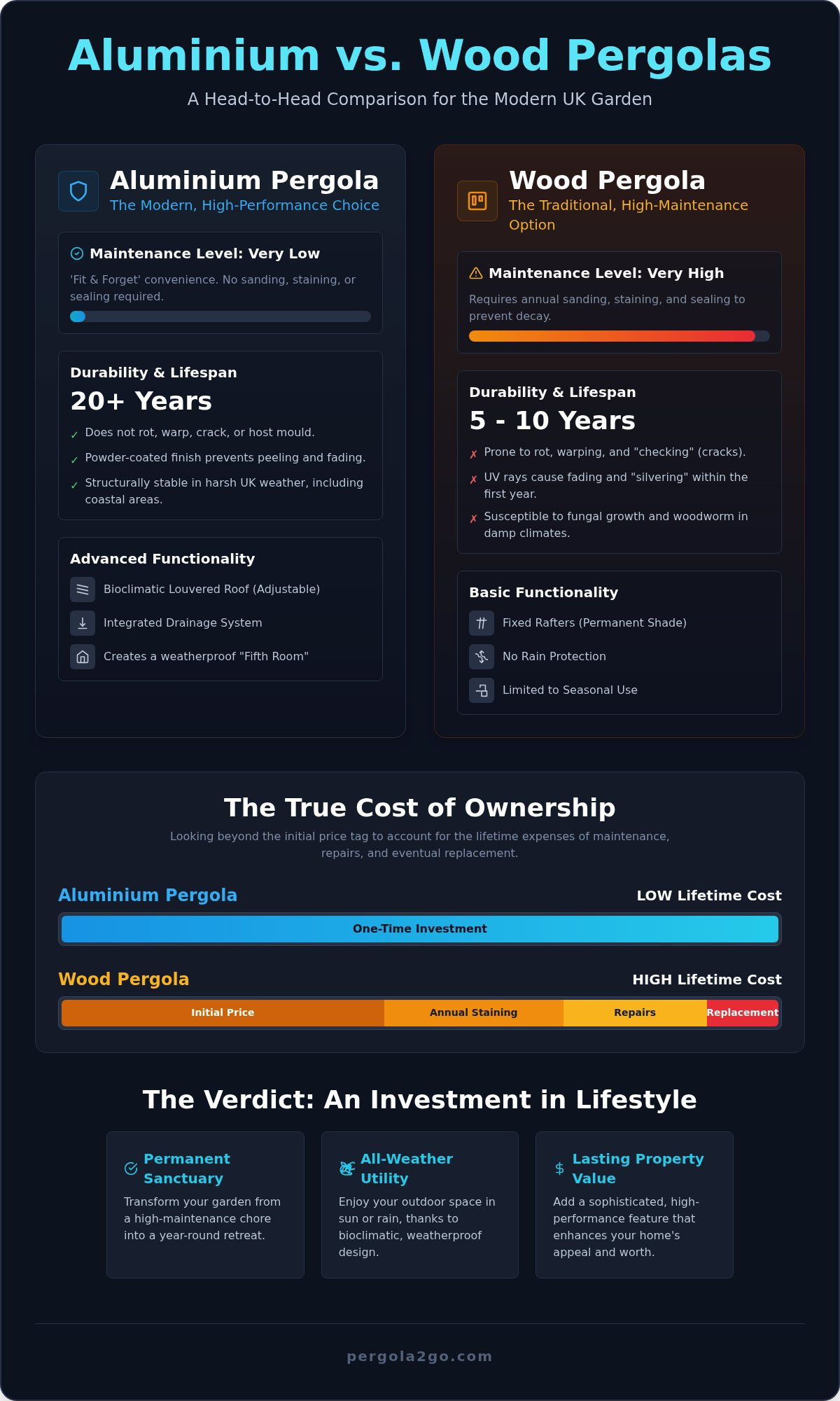
The transition from a fresh timber structure to a weathered one happens faster than most homeowners expect. Within the first year, UV rays cause the wood to "silver," losing its original warmth. By year three, small cracks known as "checks" appear as the wood dries and shrinks. These gaps allow moisture to penetrate deep into the grain, inviting fungal growth and woodworm. You'll find yourself spending significant sums on premium oils, specialist brushes, and high-performance sealants just to keep the structure safe. In the damp UK climate, an untreated softwood pergola typically lasts between five and ten years before structural rot becomes a safety concern. Even with annual staining, the labour involved is a heavy price to pay for a seasonal aesthetic.
The Fit and Forget Nature of Aluminium
Step into a world of zero-maintenance durability with engineered aluminium. Unlike timber, aluminium does not absorb water, meaning it can't rot, warp, or host mould. The structural integrity remains identical from day one to year twenty. This resilience is achieved through a high-grade powder-coating process that creates an impenetrable barrier against the elements. It won't peel or flake, even in harsh coastal environments where salt spray destroys traditional paint. If you want to spend more time hosting and less time sanding, consider the low-maintenance luxury of a metal structure.
Your cleaning routine is reduced to a simple seasonal wipe-down with soapy water to remove dust or fallen leaves. There's no need for chemical treatments or heavy labour. This "fit and forget" quality is why the benefits of aluminium pergola systems are so compelling for busy professionals. To ensure your peace of mind, quality kits come with a 10-year structural warranty, providing a level of security that timber simply cannot match. You aren't just buying a garden structure; you're investing in a permanent, worry-free extension of your home.
Weatherproofing and Year-Round Utility in the UK Climate
The UK climate is notoriously unpredictable. One moment you're enjoying a rare afternoon of sunshine; the next, you're rushing indoors as a drizzle turns into a downpour. Traditional wooden pergolas, while charming, offer little more than dappled shade. Their static rafters are designed for aesthetics rather than actual weather protection. By contrast, an engineered metal structure turns your patio into a reliable sanctuary. Understanding the benefits of aluminium pergola design means recognising that you no longer have to let the forecast dictate your social life.
Louvered Roofs: The Game Changer
Imagine having total control over the sky above you. Louvered roofs are the core innovation that makes aluminium the superior choice for year-round utility. When the sun is out, you can tilt the louvres to capture the light or provide cooling ventilation. When the clouds break, a simple adjustment closes the roof completely, creating a 100% waterproof seal. Wood structures simply can't compete here without heavy, permanent roofing that often requires planning permission or ruins the open-air feel. It's the difference between a decorative garden feature and a functional outdoor room.
Engineering for the British elements goes beyond just the roof. High-quality aluminium frames are built to handle significant snow loads of up to 250 kg per square metre and wind speeds reaching Beaufort scale 10. Unlike wood, which can catch the wind like a sail or sag under heavy snow, metal structures remain rigid and secure. A critical feature is the integrated drainage system. Water is channelled through internal gutters within the beams and down through the legs, preventing the messy splashing and "waterfall" effect common with timber structures. This precision engineering ensures your furniture stays dry and your patio remains usable regardless of the season.
Integrated Accessories for Winter Use
True year-round utility requires more than just a roof. It's about comfort and atmosphere. Aluminium beams are designed with internal channels, making it easy to install a professional LED lighting kit or an infrared heater without visible, messy wiring. These additions transform your garden into a cosy retreat even on the coldest January nights. You can host dinner parties or enjoy a morning coffee outdoors while staying perfectly warm.
To truly seal out the UK chill, you can evolve your structure into a garden pergola with sides. By adding wind blinds or side screens, you create a protected microclimate that blocks the wind while maintaining your view. These benefits of aluminium pergola systems ensure that your investment isn't just a summer luxury, but a functional extension of your home that you'll use every single day. It's about creating a space that adapts to your needs, not the other way around.
Comparing the True Cost: Initial Investment vs Long-Term Value
Don't be misled by the low entry price of a basic timber kit. While wood often appears budget-friendly at first glance, it frequently hides a trail of ongoing expenses that quickly erode any initial savings. High-quality aluminium represents a larger upfront commitment, but it's an investment in permanent property value rather than a recurring cost. One of the primary financial benefits of aluminium pergola systems is the "buy once, enjoy forever" nature of the product. You aren't just purchasing a garden structure; you're adding a durable architectural feature that functions much like a home extension.
A permanent aluminium structure adds genuine equity to your home. In the eyes of a surveyor or a potential buyer, a sleek, louvered system is a high-end asset. Conversely, a wooden pergola that has begun to silver or show signs of rot can actually decrease a property's appeal, often being viewed as a demolition project rather than a feature. By choosing a modular aluminium system, you also save significantly on labour, as these structures are designed for straightforward assembly without the need for specialist contractors.
Calculating Total Cost of Ownership (TCO)
If you look at a five-year horizon, the "cheap wood" fallacy becomes clear. To keep a timber pergola safe and attractive in the UK, you'll spend hundreds of pounds on premium oils, UV-resistant stains, and replacement hardware. When you factor in the value of your own time spent on these chores, the cost of wood skyrockets. Aluminium has a zero-cost maintenance profile, requiring nothing more than a quick rinse to stay in showroom condition. Over twenty years, you might replace a softwood structure three times, whereas a single aluminium system will still be under its structural warranty. An aluminium pergola retains significant resale value as a permanent architectural feature, whereas a weathered wooden structure often becomes a liability that decreases a property's appeal.
Installation: DIY Simplicity vs. Carpentry Costs
The complexity of the build is another hidden expense. Timber requires precision cutting, heavy lifting, and expert drilling to ensure it's structurally sound. Unless you're a skilled hobbyist, this usually means hiring a carpenter, which can double your total spend. Aluminium kits are engineered for DIY simplicity. With a modular design, two people can typically complete the assembly over a single weekend using standard tools. Everything arrives pre-measured and pre-drilled, removing the risk of costly mistakes. You can explore our range of DIY-ready aluminium pergolas to see how easy it is to achieve a professional-grade result without the professional-grade price tag for labour. Nationwide delivery ensures that these standardised, high-quality kits reach your door ready for immediate installation, providing a level of convenience that bespoke timber builds simply cannot match.
Making Your Decision: Which Pergola Is Right for Your Garden?
Choosing the right structure is the final step in reclaiming your outdoor environment. It's a choice between a traditional hobby and a modern lifestyle. While both materials have their place in the UK garden, the right one for you depends on your property's character and how much time you're willing to invest in its upkeep. Deciding between timber and metal isn't just about the aesthetic of your patio; it's about how you want to spend your precious summer weekends and autumn evenings.
When to Choose Wood
Timber remains the logical choice for specific scenarios. If you live in a Grade-II listed building or a strictly traditional cottage, a wooden pergola might be required to satisfy local planning constraints or preserve an aesthetic heritage. It's also suitable for those with a very tight immediate budget who possess the carpentry skills to manage the build and the patience for annual maintenance. If you only require a temporary, seasonal shade and don't mind the eventual weathering and repair cycles, wood offers a classic, albeit high-effort, solution for the dedicated gardener.
When to Choose Aluminium
For those who value immediate gratification and a "set and forget" lifestyle, metal is the gold standard. One of the most significant benefits of aluminium pergola ownership is the total freedom it provides. You can host dinner parties in October or enjoy a morning coffee during a spring shower without a second thought. Our range of garden pergolas is specifically designed for the UK homeowner who wants a professional-grade, year-round room without the stress of bespoke construction or the liability of rotting timber.
Future-proofing your home means choosing materials that stand the test of time. As we move through 2026, the trend toward sustainable, recyclable, and durable outdoor living continues to grow. Aluminium isn't just a design trend; it's a permanent upgrade to your property's equity. With Pergola2Go, you're choosing a partner that provides nationwide UK delivery, a 10-year structural warranty, and a modular design that makes DIY assembly a reality for everyone. Your garden should be a sanctuary, not a source of work. Make the choice that lets you enjoy your outdoor space every single day of the year.
Step Into Your Future Garden Sanctuary
Choosing a garden structure is about more than just aesthetics; it's about how you value your time and comfort. You've seen how traditional wood requires a lifetime of sanding and staining, while engineered aluminium offers a "fit and forget" solution. By embracing the bioclimatic innovation of a louvered roof, you transform your patio into a reliable, year-round "fifth room" that defies the British rain. The long-term financial benefits of aluminium pergola ownership are clear. You trade recurring maintenance costs for permanent property equity and immediate peace of mind.
It's time to stop dreaming of a better garden and start building one. With over 500+ five-star garden transformations already completed, our team is ready to help you achieve a professional-grade result through simple DIY assembly. We provide a 10-year structural warranty on our kits to ensure your investment is protected for a decade and beyond. Explore our range of premium aluminium pergolas and transform your garden today with free nationwide UK delivery. Your sanctuary is closer than you think.
Frequently Asked Questions
Do aluminium pergolas rust in the UK rain?
No, high-quality aluminium is naturally resistant to rust and corrosion. The powder-coated finish provides a durable barrier that protects the metal from the damp British climate, ensuring the structure remains pristine without the need for painting or treatment. This is one of the key benefits of aluminium pergola ownership for those living in coastal or high-rainfall areas.
Is a wooden pergola cheaper than an aluminium one in the long run?
While timber kits have a lower upfront cost, they are rarely cheaper over time. When you factor in the annual expense of premium stains, oils, and the labour required for maintenance, wood becomes a significant financial drain. Aluminium is a "buy once" investment that requires zero maintenance and lasts decades longer than traditional softwood structures.
Can I install an aluminium pergola myself, or do I need a pro?
You can certainly manage the installation yourself. Our modular kits are specifically engineered for DIY assembly, usually requiring just two people and a single weekend to complete. Everything arrives pre-drilled and pre-measured, which eliminates the need for expensive specialist carpenters or complex cutting on-site.
Which material handles high winds and snow better?
Aluminium is the superior choice for structural integrity in extreme weather. These structures are engineered to withstand wind speeds up to Beaufort scale 10 and can support snow loads of up to 250 kg per square metre. Wood can warp or sag under heavy snow, whereas metal remains rigid and secure throughout the year.
Do aluminium pergolas get too hot in the summer sun?
No, they stay surprisingly comfortable. The powder-coated surface reflects a significant amount of solar heat, and the adjustable louvered roof allows for constant airflow. By tilting the louvres, you can block direct sunlight while letting heat escape, creating a cool microclimate that timber structures with fixed roofs cannot provide.
How long does a wooden pergola actually last in the UK?
A standard softwood pergola typically lasts between 5 and 10 years before rot and structural decay become safety issues. Even premium cedar requires intensive annual care to reach a 15-year lifespan. In contrast, an aluminium system is a permanent addition to your property, often backed by a 10-year structural warranty as a baseline.
Can I add sides or a roof to a wooden pergola later?
Adding integrated features to wood is extremely difficult and often looks messy. Timber frames aren't designed to support the weight of louvered roofs or the tension of wind blinds. One of the benefits of aluminium pergola systems is the ability to seamlessly add side screens, heaters, and lighting kits into pre-engineered channels.
Do I need planning permission for an aluminium pergola in the UK?
Most pergolas fall under "permitted development" and don't require planning permission. However, you must follow specific rules; the structure shouldn't exceed 2.5 metres in height if it's within 2 metres of a property boundary. If your home is a listed building or in a conservation area, it's always best to check with your local council first.


