

Imagine waking up after a 70mph winter gale to find your garden furniture scattered, yet your outdoor sanctuary stands perfectly still and silent. For many UK homeowners, the fear of a structural collapse during a storm isn't just a worry; it's a reason to delay investing in their dream garden. You've likely felt that pang of anxiety when the wind starts to whistle through a cheap trellis or rattle a lightweight frame. We believe your peace of mind is just as important as your patio's aesthetic.
Finding the right pergola for windy conditions means looking beyond the surface to the precision-engineered details that define true durability. This guide shows you how to select a heavy-duty, powder-coated aluminum structure that combines aspirational luxury with the structural integrity required for Britain's most exposed landscapes. You'll learn how to interpret wind-load ratings, choose the correct anchoring for your specific ground type, and complete a professional-grade DIY installation. We're turning the fit and forget dream into a reality, ensuring your new oasis remains a permanent, sophisticated fixture regardless of what the Met Office predicts.
Key Takeaways
- Understand the science of aerodynamics and why adjustable louvered roofs eliminate the dangerous "sail effect" common in traditional garden structures.
- Discover why precision-engineered aluminium is the ultimate material for a pergola for windy conditions, offering superior rigidity and strength compared to high-maintenance timber.
- Master the "Three-Point Rule" for secure anchoring to ensure your outdoor sanctuary remains rock-solid against the most demanding British gales.
- Learn how to select integrated zip-lock side screens that act as effective wind-breaks without compromising the structural integrity of your sophisticated oasis.
- Find out how to achieve a professional-grade garden transformation with all-weather kits designed for immediate gratification and decade-long durability.
The Science of Aerodynamics: Why Louvered Pergolas Excel in Windy Conditions
Wind load is the most critical metric for any UK garden installation. It measures the force that wind exerts on a structure, and in a country that experiences an average of 8 to 12 named storms every year, ignoring this data is a risk you don't want to take. When you're searching for a pergola for windy conditions, you're looking for a structure that manages air pressure rather than fighting it. While traditional wooden structures provide a classic look, they often lack the precision-engineered response needed for high-velocity gusts. To understand the evolution of these outdoor features, you can read about What is a pergola? and how they've transitioned from simple shade structures to advanced aerodynamic systems.
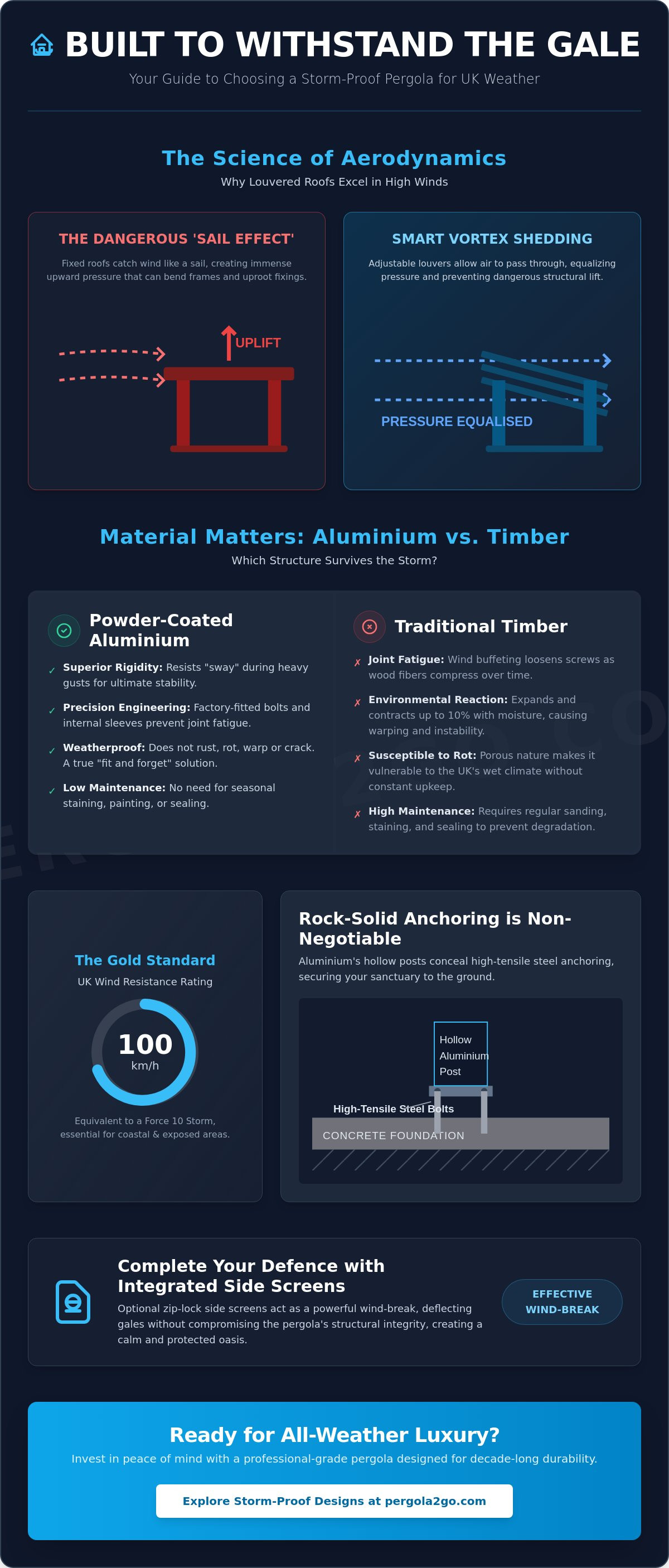
Fixed-roof or heavy fabric canopy structures often fall victim to the "sail effect." This occurs when wind hits a solid surface and has nowhere to go, creating immense pressure that can bend frames or even uproot fixings. Modern louvered designs solve this through the science of vortex shedding. By breaking up the wind flow into smaller, less powerful swirls, the structure reduces the vibration and "shuddering" often felt during a gale. This heavy-duty engineering ensures your outdoor oasis remains a calm sanctuary even when the weather turns aggressive.
Louvered vs. Fixed Roofs: Managing Air Pressure
A closed, solid roof creates a vacuum effect. As wind speeds over the top of a flat surface, the air pressure drops, creating a lifting force similar to an aeroplane wing. This is why many lightweight gazebos fail in UK winters. Louvered roofs allow you to "crack" the blades to a 15-degree or 30-degree angle during high-wind alerts. This small adjustment allows air to pass through the roof, equalising the pressure between the top and bottom of the structure. Louvered aerodynamics function as a dynamic pressure-relief system that prevents structural lift by equalising air flow.
Wind-Load Ratings Explained
You'll often see products rated on the Beaufort Scale, a system that relates wind speed to observed conditions at sea or on land. For a premium pergola for windy conditions in the UK, a resistance rating of 100km/h (approximately 62mph) is the gold standard. This level of durability is essential for coastal regions or exposed hilltop gardens where Force 10 storms are a seasonal reality. Our precision-engineered aluminium frames also feature premium powder-coated finishes. These aren't just for aesthetics; they create a smooth, low-friction surface that reduces wind-driven noise and prevents the whistling sounds common in lower-quality builds. Choosing a ready-to-go, high-spec kit ensures your investment stays standing while others are being repaired.
Aluminium vs. Timber: Which Material Survives the Storm?
Choosing a pergola for windy conditions requires a shift in mindset from purely aesthetic to structural engineering. While timber has long been a staple in British gardens, its performance during a typical 50mph gale often leaves homeowners disappointed. Wood is a natural, porous material that reacts to its environment. Aluminium, by contrast, provides a superior strength-to-weight ratio that prevents the structural "sway" often felt in wooden alternatives during heavy gusts. This rigidity isn't just about comfort; it's about the long-term survival of your outdoor sanctuary.
Structural Integrity and Joint Fatigue
The primary weakness of timber in high winds is joint fatigue. Wood screws and nails rely on the friction of organic fibers to stay secure. As wind buffeting creates constant micro-movements, those fibers compress and loosen. This process is accelerated by the UK's wet climate, where wood expands and contracts by up to 10% between seasons. This cycle creates "play" in the joints, leading to a structure that leans or rattles. Precision-engineered aluminium pergolas use factory-fitted bolts and internal sleeves. These components maintain a perfectly "square" shape for decades, ensuring the frame remains as stable as the day it was installed.
Weight vs. Anchoring Strength
There is a common myth that a heavier timber structure is naturally better for wind resistance. In reality, weight can be a liability if it isn't paired with sophisticated anchoring. Aluminium’s hollow-core posts are a triumph of modern design, allowing for discrete, high-tensile steel anchoring systems to be hidden inside the leg. This ensures the structure meets the safety requirements outlined in the UK building regulations for wind and snow loads. Because aluminium is lighter than solid oak but more rigid than softwood, it puts less stress on your patio or decking while offering superior uplift resistance. For a complete breakdown of these technical specs, read our Aluminium Pergola UK: The Ultimate Buyer's Guide (2026).
Durability in the UK isn't just about wind speed; it's about the debris and moisture that the wind carries. Wind-driven rain and salt spray in coastal regions like Brighton or Whitby can cause timber to rot or warp within 60 months. A premium, powder-coated aluminium pergola for windy conditions is entirely maintenance-free. It won't rust, peel, or require the annual staining that timber demands. It creates a sophisticated, permanent oasis that stands firm against the elements. If you're looking to transform your garden into a year-round retreat, you can browse our weather-ready collections to find the perfect fit for your home.
Essential Anchoring Techniques for High-Wind Zones
Your pergola's ability to withstand a British gale depends entirely on its connection to the earth. Even a precision-engineered aluminum frame will fail if the foundation isn't up to the task. We follow the Three-Point Rule for maximum stability: a perfectly level base, high-tensile hardware, and a substrate that meets UK Building Regulations for wind loads. This ensures your structure doesn't just sit on your patio but becomes a permanent, structural part of your home's footprint.
Choosing the right hardware is the next critical step. Expansion bolts are the industry standard for solid concrete, using mechanical pressure to grip the sides of a pre-drilled hole. For homeowners with older masonry or porous stone, chemical anchors provide a superior alternative. These involve injecting a high-strength resin into the hole before inserting the bolt, creating a waterproof, vibration-proof bond that won't crack the surrounding material. A pergola for windy conditions requires this level of detail to ensure it remains an oasis of calm during a storm.
Securing to Concrete and Paving
To achieve a professional-grade finish, ensure your concrete pad is at least 100mm deep. Start by marking your post positions and drilling holes with a heavy-duty SDS drill. Clear all dust from the holes before setting your M10 or M12 expansion bolts. Use a spirit level to verify that each post has zero-gap contact with the ground. This prevents the "lever effect" where wind gets under the base plate and puts unnecessary stress on the fixings. It's a simple step that separates a DIY-friendly project from a lifelong architectural upgrade.
Mounting on Timber or Composite Decking
Mounting directly onto deck boards is a common mistake that leads to structural failure in high winds. You must use "blocking" by installing 100mm x 100mm timber supports directly beneath the deck boards where the pergola feet will sit. Secure the base plates using heavy-duty coach bolts that pass through the decking and into the structural subframe. This transfers the wind load to the entire deck's weight rather than just a few boards. For a sleek, premium finish, use matching powder-coated bolt caps to hide the fixings and maintain the sophisticated ambiance of your outdoor sanctuary.
Wind Blinds and Side Screens: Breaking the Gale
A high-quality pergola for windy conditions shouldn't just stand firm; it should actively improve the environment beneath it. Most homeowners fear that adding sides will create a "parachute effect," where the structure catches the wind and risks lifting. Modern engineering solves this through clever diffusion. By using premium side screens and panels, you aren't just blocking the air. You're managing its velocity. This creates a micro-climate sanctuary that stays calm even when the rest of the garden is blustery.
The goal is to transform your patio into a year-round sanctuary. To achieve this, your structure needs to balance resistance with airflow. Heavy-duty components ensure the frame stays put, while the accessories do the hard work of breaking up gusts before they reach your seating area. It's about precision-engineered comfort that feels both sophisticated and secure.
The Role of Integrated Wind Blinds
Precision-engineered wind blinds are the first line of defence. Unlike cheap, loose-hanging curtains, these systems use weighted tracks and sophisticated zip-lock technology. This ensures the fabric remains taut within the side channels, preventing it from flapping or tearing during a typical British gale. When the fabric is locked into the frame, it adds to the overall structural rigidity rather than acting as a liability.
Mesh density is the secret to performance. High-specification screens allow a small percentage of airflow to pass through. This tiny amount of "bleed" prevents pressure build-up, ensuring your pergola for windy conditions remains stable. Retractable sides offer a level of safety that fixed walls can't match. If a red weather warning hits, you simply retract the blinds into their protective powder-coated cassettes. For more details on choosing the right configuration, explore our Garden Pergola with Sides: Your Guide to Year-Round Outdoor Living in 2026.
Decorative Panels as Wind Diffusers
If you prefer a permanent aesthetic, laser-cut decorative panels are a sophisticated alternative. These aren't just for privacy; they're functional wind diffusers. The science is simple. As wind hits the intricate patterns, it's forced to break apart and swirl through the gaps. This process can reduce wind speed by up to 50% immediately behind the panel, turning a sharp breeze into a gentle movement of air.
- Maintenance-free: Powder-coated aluminium panels won't rot, warp, or require annual painting like wooden slats.
- Light management: You can diffuse the wind without sacrificing the natural light that makes outdoor living so appealing.
- Structural integrity: Mixing solid side panels with a louvered roof creates a rigid, heavy-duty frame that feels like a natural extension of your home.
You don't have to choose between a view and comfort. By combining these elements, you're investing in an oasis that's ready for any weather 2026 throws at it. This DIY-friendly approach means you can achieve a professional-grade outdoor transformation in a single weekend.
Why Pergola2Go is the UK’s Choice for All-Weather Luxury
British weather is notoriously unpredictable, demanding outdoor structures that offer more than just aesthetic appeal. When you invest in a pergola for windy conditions, you need the certainty that it will stand firm against Atlantic gales and sudden coastal gusts. Our kits are specifically engineered for the UK climate, moving beyond the flimsy designs often found in big-box retail stores. We maintain a fully stocked UK warehouse to ensure that your garden transformation begins within days, providing a seamless transition from purchase to installation.
Our modular approach simplifies the assembly process without compromising on industrial-grade stability. Each component is designed for DIY-friendly precision, ensuring that the finished structure is perfectly aligned and easy to secure to your patio or decking. This focus on structural integrity means your outdoor oasis remains a permanent fixture of your home, not a seasonal accessory that needs to be dismantled when the wind picks up.
Precision Engineering and Warranty
We utilize a heavy-duty aluminium gauge across our entire range, providing a level of tensile strength that resists bending and warping under pressure. This robust framework is powder-coated to prevent corrosion, maintaining its sophisticated finish through years of rain and salt air. Our 10-year structural warranty reflects our confidence in this engineering, offering you complete peace of mind by covering the frame's integrity against wind damage and material failure. The "2go" philosophy is at the heart of everything we do: providing high-end, architectural quality that is ready to ship and simple for any homeowner to install. It is professional-grade luxury made accessible.
- Heavy-duty T6063 aluminium for maximum wind resistance.
- 10-year structural warranty for long-term security.
- Precision-cut modular kits for a perfect fit.
- Fast, nationwide delivery from our local UK stock.
Creating Your Four-Season Sanctuary
A Pergola2Go structure does more than provide shade; it creates a genuine four-season sanctuary. By integrating custom-fit infrared heaters and dimmable LED lighting, you can maintain a warm, inviting ambiance even as the sun sets or the temperature drops. These features turn a simple patio into a wind-resistant garden room that feels like a natural extension of your indoor living space. You don't have to wait for a heatwave to enjoy your garden. To see how these elements come together, explore these 25+ Modern Pergola Ideas for 2026: Transform Your UK Garden into a Year-Round Sanctuary.
Stop letting the wind dictate when you can enjoy your outdoor space. Transform your garden today with Pergola2Go and invest in a structure designed to thrive in the British elements.
Secure Your Outdoor Sanctuary Against the British Elements
You don't have to let the unpredictable UK weather dictate when you enjoy your garden. Choosing a precision-engineered pergola for windy conditions means opting for heavy-duty, powder-coated aluminium over traditional timber, which often warps or rots under pressure. A louvered roof system provides the ultimate aerodynamic advantage by allowing air to flow through freely, effectively reducing the uplift that damages standard structures. By combining these advanced materials with professional-grade anchoring techniques, you create a permanent oasis that stands firm against the gale.
At Pergola2Go, we've simplified the journey to all-weather luxury. Our kits arrive with a 10-year structural warranty, giving you a full decade of guaranteed peace of mind. Every component features rust-resistant powder-coated aluminium designed to look pristine for years. With our fast nationwide UK delivery, your professional-grade transformation can begin in days rather than months. It's time to reclaim your patio and enjoy sophisticated outdoor living regardless of what the forecast says. Your dream garden is closer than you think.
Upgrade your garden with a wind-resistant Pergola2Go kit today
Frequently Asked Questions
Can an aluminium pergola really withstand high winds in the UK?
Yes, a premium aluminium pergola for windy conditions is specifically engineered to withstand the UK's unpredictable coastal and inland gales. Unlike traditional wooden structures that rot or warp, our heavy-duty, powder-coated frames provide a permanent, rust-resistant solution. These structures utilize T6 aircraft-grade aluminium, ensuring your outdoor oasis remains stable and sophisticated even when wind speeds reach 100km/h. It's a professional-grade transformation that guarantees peace of mind during storm season.
Do I need to leave the louvers open or closed during a storm?
You should always leave the louvers in a partially open or vertical position during high-wind events. This allows air to flow freely through the roof, significantly reducing the uplift force that can strain the fixings. By keeping the blades at a 90-degree angle, you prevent the structure from acting like a sail. This simple adjustment protects your investment and ensures the precision-engineered mechanisms remain functional for years to come.
What is the maximum wind speed a Pergola2Go structure can handle?
Pergola2Go structures are tested to withstand wind speeds of up to 120km/h, which is equivalent to a Force 11 violent storm. This high-performance rating comes from our use of reinforced internal ribbing and heavy-duty footplates. We've designed these kits to surpass standard UK building requirements, ensuring your sanctuary stays intact during extreme weather. You can enjoy your garden with total confidence, knowing the engineering has been validated against 2026 safety standards.
Is it better to have a wall-mounted or free-standing pergola in windy areas?
A wall-mounted pergola often provides superior stability in exposed areas because the house itself acts as a massive structural anchor. By securing one side directly to your home's brickwork, you eliminate lateral movement during 60mph gusts. However, our free-standing models are equally capable if you use 15mm expansion bolts into a 400mm deep concrete pad. Both options deliver a seamless, high-end look while maintaining the industrial durability required for a pergola for windy conditions.
Will my wind blinds rattle or tear during a gale?
Our premium zip-track blinds won't rattle because they're secured within deep side channels along the entire height of the post. This precision-engineered system keeps the fabric taut, preventing the flapping noise common with cheaper alternatives. We recommend retracting the blinds if winds exceed 50km/h to preserve the life of the textile. This balance of lifestyle elegance and practical design ensures your outdoor room stays quiet and sophisticated.
How do I maintain the structural integrity of my pergola over time?
Maintain your pergola by checking the tightness of the stainless steel bolts twice a year, typically in March and October. You should also clear the integrated guttering system of leaves to ensure efficient water drainage, which prevents weight imbalances during heavy rain and wind. Because our frames are powder-coated, they require no painting or staining. A simple wash with soapy water keeps the finish looking like a luxury showroom piece for decades.
Do I need planning permission for a wind-resistant pergola?
Most UK homeowners don't need planning permission because these structures fall under Permitted Development rules as temporary outbuildings. You must ensure the height stays below 2.5 metres if it's within 2 metres of a boundary, or 3 metres for a free-standing structure. Always verify local council regulations if you live in an Area of Outstanding Natural Beauty or a Conservation Area. This DIY-friendly approach makes upgrading your home fast and efficient.
What happens if a part is damaged during an extreme weather event?
Our modular design ensures that individual components like louvers or side tracks can be replaced without dismantling the entire structure. If an extreme 1-in-50-year weather event causes damage, you can simply order the specific part needed for a quick repair. This 2go philosophy means your garden oasis is never out of action for long. We stock 95 percent of spare parts in our UK warehouse for immediate dispatch to our customers.


