

Your perfectly planned garden dinner shouldn't end with a frantic dash inside because of a sudden gale. While a pergola adds undeniable elegance to your property, it often leaves you at the mercy of the unpredictable British weather. Adding wind blinds to a pergola is the strategic architectural upgrade that finally bridges the gap between a seasonal feature and a permanent lifestyle sanctuary. It's about taking control of your environment so you can enjoy the fresh air without the disruptive rattle of low-quality screens or the prying eyes of neighbours.
You've likely felt the frustration of a beautiful outdoor space that sits empty for half the year because it's just too draughty. We understand that you want a solution that matches the sophisticated engineering of your current frame while offering industrial-grade durability. This guide will help you discover how to transform your outdoor structure into a sheltered, year-round sanctuary with the right wind blinds and installation techniques. We'll walk through choosing the best weather-resistant materials and explain how these additions can increase your property value while maintaining a sleek, modern aesthetic that complements your home.
Key Takeaways
- Transform your outdoor space into a shielded sanctuary by learning how wind blinds create a thermal barrier against draughts and autumn chills.
- Compare the benefits of cost-effective manual pull-downs against the ultimate convenience of smartphone-controlled motorised zip screens.
- Master the structural requirements for a stable setup, including why square posts are essential for smooth, rattle-free side-guide operation.
- Follow our guided process for adding wind blinds to a pergola to secure a draught-free environment in just one afternoon.
- Explore how precision-matched powder coating and UV-resistant fabrics ensure your new screens look like a sleek, built-in architectural feature.
The Benefits of Adding Wind Blinds to a Pergola
Think of your outdoor space as more than just a patio; envision it as a high-performance extension of your home. While many homeowners focus solely on sun protection, adding wind blinds to a pergola is the secret to mastering the British climate. These aren't just fabric covers. They're precision-engineered barriers that transform a breezy, exposed platform into a tranquil retreat. By creating a physical shield against the biting North wind, you effectively lower the wind-chill factor, making an October evening feel as mild as a July dusk. Understanding What is a Pergola? helps illustrate how far these structures have come, evolving from simple open frames into sophisticated, enclosed living zones.
The impact on your comfort is immediate. High-quality wind blinds act as a thermal layer, trapping pockets of air that would otherwise be whisked away by a draft. This protection extends to your investment, too. Sideways rain and wind-blown debris can quickly age garden furniture and outdoor rugs. With Side Screens deployed, your interior-style decor remains pristine and dry, regardless of a sudden downpour. Additionally, these blinds offer advanced UV filtration. They block the harsh rays that cause fabrics to fade while simultaneously keeping the internal temperature significantly cooler during the height of summer.
Creating a Year-Round Microclimate
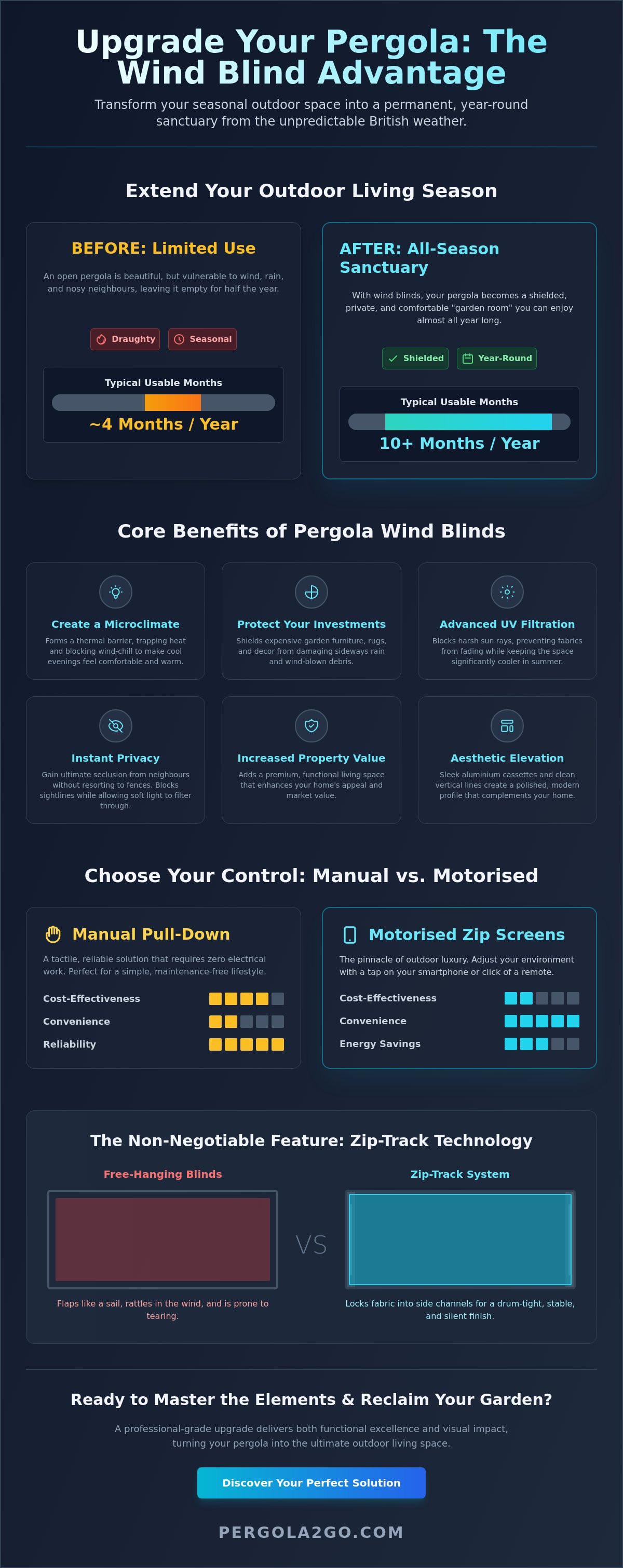
You can effectively extend your outdoor season from a mere four months to over ten months of the year. The magic happens when you pair wind blinds with an Infrared Heater. Because the blinds prevent heat from dissipating into the garden, they help maintain a consistent, warm microclimate. This enclosure provides a psychological shift as well. Stepping into a shielded pergola feels like entering a "garden room" rather than standing in an open field. It offers a sense of security and permanence that makes your morning coffee or evening glass of wine feel like a genuine escape from the world.
Privacy and Aesthetic Elevation
Seclusion is the ultimate luxury in modern property ownership. Adding wind blinds to a pergola provides instant privacy from overlooked gardens without the need for high fences or slow-growing hedges. You can block the line of sight from neighbouring windows while still allowing soft, natural light to filter through the fabric. From an architectural perspective, the addition of sleek aluminium cassettes creates a polished, modern profile. The clean vertical lines of the blinds complement the frame of your Aluminium Pergola, adding a sense of height and sophistication that elevates your home’s entire aesthetic. It’s a professional-grade upgrade that delivers both functional excellence and visual impact.
Types of Pergola Wind Blinds: Manual vs. Motorised
Choosing the right mechanism for your outdoor space is about balancing your daily routine with your budget. Manual pull-down blinds offer a tactile, reliable solution that requires zero electrical work. They're perfect for homeowners who appreciate a simple, maintenance-free lifestyle. On the other hand, motorised zip screens represent the pinnacle of outdoor luxury. With a simple tap on your smartphone or a click of a remote, you can adjust your environment without leaving your seat. This automation isn't just about comfort; it's about the energy-saving benefits of managing solar gain and wind-chill instantly as the weather shifts.
When adding wind blinds to a pergola, many people overlook the importance of wind-load ratings. In a typical UK garden, wind speeds often funnel between buildings, creating high-pressure zones that can shred inferior products. Professional-grade blinds are engineered to withstand these specific pressures. This ensures the fabric doesn't buckle or tear during an unexpected gust, giving you peace of mind that your investment is secure. It's the difference between a seasonal accessory and a permanent architectural upgrade.
Understanding Zip-Track and Tensioning
Free-hanging blinds are essentially sails. They flap, rattle, and eventually fail when the wind picks up. Zip-track technology solves this problem by locking the fabric edges into dedicated side channels. This creates a drum-tight finish that remains stable even in heavy weather. A weighted bottom bar is the final piece of the engineering puzzle. It provides the gravity-fed tension needed for a smooth, silent glide every time you operate the screen, preventing the fabric from bunching or sticking.
Material Science: Mesh vs. Solid
The fabric you choose dictates the atmosphere of your outdoor room. You generally have two high-performance options:
- Textilene Mesh: This high-density weave is the industry standard for a reason. It blocks up to 95% of wind and rain but allows just enough airflow to prevent the "sail effect" or a vacuum from forming inside your pergola.
- Waterproof PVC-Coated Fabrics: These offer total protection from the elements. They turn your space into a bone-dry extension of your home, though they require precise tensioning to maintain their sleek appearance.
To achieve a truly integrated look, select a fabric colour that matches your Anthracite Grey or White powder-coated frame. This creates a seamless aesthetic that feels like a natural part of your home's design. If you're ready to upgrade your structure, exploring the range of Wind Blinds available can help you find the perfect match for your existing setup.
Compatibility and Structural Considerations
Before you begin the process of adding wind blinds to a pergola, you must verify that your structure can handle the additional weight and pressure. A high-quality wind blind isn't just a piece of fabric; it's a mechanical system housed in a protective aluminium cassette. This cassette adds weight to the top horizontal beams, while the side guides require perfectly vertical and "square" posts to function correctly. If your posts are even slightly out of alignment, the zip mechanism will bind, leading to premature wear and frustrating operation. Ensuring your frame is perfectly level is the most important part of adding wind blinds to a pergola successfully.
Precision is everything when it comes to measuring. A common mistake is measuring from the outside edges of the posts. Most integrated systems require an "inside-to-inside" measurement to ensure the cassette fits snugly between the beams. Modular kits are often designed for specific post widths, such as 100mm or 120mm, so knowing your exact dimensions is the first step toward a professional finish. While bespoke solutions exist, modular kits designed for aluminium frames provide a cleaner, more integrated aesthetic that looks like it was part of the original design.
Structural Integrity and Wind Loads
When you deploy a blind, you're essentially turning your pergola into a sail. This significantly increases the wind load on your posts and the fixings that hold them to the ground. It's critical to review the Structural Considerations regarding wind limits for your specific area. Aluminium pergolas are generally superior to timber for this application. Timber can warp, twist, or split over time, which misaligns the side tracks. A powder-coated aluminium frame remains stable for decades, ensuring your blinds glide smoothly every single time. Always ensure your structure is securely bolted into a solid concrete base to provide the necessary resistance against these forces.
Retrofitting Blinds to Existing Frames
Retrofitting screens to an existing structure requires a bit of detective work. You'll need to identify clear mounting points on your posts, usually on the internal face. Look out for existing accessories like LED lighting kits or infrared heater brackets that might block the path of the side guides. If you're unsure how the final result should look, using a garden pergola with sides as a visual template can help you plan your layout. This approach ensures you maintain a sleek, modern look while avoiding costly installation errors. By planning for these obstructions early, you can create a seamless transition from an open structure to a fully enclosed outdoor room.
Step-by-Step Guide: How to Install Pergola Wind Blinds
Achieving a professional-grade finish doesn't require a team of architectural specialists. Adding wind blinds to a pergola is a rewarding afternoon project that yields immediate results in both comfort and style. Before you start, gather your essential toolkit. You'll need a reliable spirit level, a high-torque drill driver, and a steady ladder. Having a second pair of hands is also recommended when lifting the main cassette into place. This collaborative approach ensures the installation remains safe and efficient from start to finish.
Begin by mounting the top cassette. This housing contains the fabric roll and the tensioning mechanism; it must be perfectly horizontal to function correctly. Once the cassette is secured to the upper beams, you can move on to the side tracks. These tracks are the heart of the zip-track system. They must be aligned with surgical precision to ensure the fabric glides without resistance. After the tracks are in place, feed the fabric into the guides and perform the "smooth glide" check. If the screen moves effortlessly from top to bottom, you're ready for the final adjustments. Secure the bottom locking points to ensure the blind stays anchored during high winds.
The Importance of a Level Foundation
Your installation is only as good as the foundation it sits on. Use your spirit level to verify the verticality of your pergola posts before you drill a single hole. Even a minor 5mm deviation across the height of the post can cause the zip mechanism to jam or the fabric to pucker. This is why precision matters. If your posts aren't perfectly plumb, use small shims behind the side tracks to create a true vertical path for the blind to follow. This small step prevents long-term mechanical strain on the system.
Post-Installation Calibration
Once installed, your blinds require a final bit of fine-tuning for peak performance. For manual models, adjust the internal spring tension until the screen feels weightless as you lift it. This makes daily operation effortless for everyone in the family. If you've chosen motorised versions, take the time to set the limit switches carefully. This prevents the motor from over-extending the fabric or straining against the cassette, which could lead to burnout over time. A Beaufort Scale rating of 6 is the industry standard for high-quality wind blinds, certifying they can withstand strong breezes of up to 31 mph.
Ready to start your transformation? View our full range of Wind Blinds and find the perfect fit for your outdoor room.
The Pergola2Go Difference: Engineered for the British Climate
Choosing the right components for your garden shouldn't feel like a gamble with the weather. While many generic options exist, our systems are specifically engineered to handle the unique demands of the UK environment. Adding wind blinds to a pergola is a significant investment in your home's comfort, so we've ensured our products offer a level of precision that off-the-shelf alternatives can't match. Our wind blinds are designed to integrate perfectly with our aluminium pergola uk kits, ensuring a flush fit and a factory-finished look that enhances your property's value.
Aesthetics and durability go hand in hand here. We use precision-matched powder coating in Anthracite Grey to ensure your side screens look like a natural extension of your pergola frame. This isn't just about looks; it's about longevity. We're so confident in the quality of our engineering that we provide a 10-year structural warranty on our frames. Because we maintain deep stock levels right here in the UK, you won't have to wait months for bespoke imports. We offer rapid nationwide delivery to your door, allowing you to start your project while the inspiration is still fresh.
Durability and Maintenance
Your outdoor room should be a place of relaxation, not a source of endless chores. We've designed our wind blinds with low-maintenance aluminium cassettes that won't rust, peel, or degrade in the rain. The fabric is just as resilient. We use a high-performance textilene mesh that naturally resists mould and mildew, requiring only a quick wipe down with soapy water to stay looking new. If a mishap ever occurs, our modular design is a lifesaver. It allows for easy component replacement without the need to dismantle your entire structure, ensuring your sanctuary remains functional for decades.
Elevate Your Outdoor Lifestyle
True all-weather comfort comes from a holistic approach to design. By adding wind blinds to a pergola, you create the perfect foundation for further upgrades. Imagine your shielded space enhanced with our integrated LED lighting kits for evening ambiance or an infrared heater to keep the chill at bay. You'll be joining thousands of UK homeowners who have successfully reclaimed their gardens from the wind and rain. It's time to stop letting the forecast dictate your plans and start enjoying a professional-grade transformation that's well within your reach.
Ready to create your perfect outdoor sanctuary? Explore our range of Wind Blinds and Side Screens and discover the ultimate in year-round garden living.
Master Your Outdoor Environment Today
You've discovered that adding wind blinds to a pergola is far more than a simple accessory update. It's a strategic move to reclaim your garden from the elements, turning an open frame into a high-performance outdoor room. By selecting the right zip-track technology and ensuring a level installation, you've set the stage for a decade of tranquil, draught-free relaxation. Your home deserves a space that doesn't close for the winter just because the breeze picks up.
With our 10-Year Structural Warranty and a 4.9/5 customer satisfaction rating, you can invest with absolute confidence in our engineering. We provide fast nationwide UK delivery to ensure your project starts without delay, bringing professional-grade quality directly to your door. Upgrade your outdoor space with Pergola2Go Wind Blinds and start enjoying the elevated lifestyle you've envisioned. Your perfect, all-weather garden sanctuary is just one afternoon away.
Frequently Asked Questions
Can I add wind blinds to a wooden pergola?
You can add wind blinds to a wooden structure, but timber's natural tendency to warp or expand can misalign the side tracks over time. For the most reliable results, adding wind blinds to a pergola made of powder-coated aluminium is recommended. The metal frame remains perfectly square, ensuring the zip-track mechanism never binds or jams as the seasons change.
Are pergola wind blinds completely waterproof?
Most high-quality blinds use a high-density textilene mesh that's highly water-resistant rather than 100% waterproof. This fabric effectively blocks up to 95% of sideways rain, keeping your furniture dry in most conditions. The mesh design is intentional; it allows for minimal airflow which prevents a vacuum effect and keeps the space from feeling stifling during humid summer days.
How much wind can a pergola blind actually withstand?
Professional-grade wind blinds are typically rated to withstand winds up to Beaufort Scale 6, which is approximately 31 mph. While they're built for industrial-level durability, we recommend retracting them into their protective cassettes during severe gales or named storms. This simple precaution protects the tensioning system and ensures your investment remains in peak condition for years to come.
Can I install these blinds myself or do I need a professional?
You can certainly install these yourself as they're engineered for straightforward DIY assembly. We don't offer installation services because the modular design is simplified for the everyday homeowner. With basic tools like a drill driver and a spirit level, most people can complete the process of adding wind blinds to a pergola in just a few hours per side.
Do wind blinds provide shade from the sun as well?
Yes, wind blinds are excellent for sun protection and heat management. They block a significant percentage of harmful UV rays, which prevents your outdoor furniture from fading and keeps the internal temperature comfortable. You'll enjoy a clear view of your garden without the discomfort of direct sun glare, making your pergola the perfect spot for reading or dining.
What is the difference between a side screen and a wind blind?
While the terms are often used interchangeably, a wind blind usually features a zip-track system that locks the fabric into the side guides for maximum stability. A standard side screen might hang freely or use simple cables, which makes it more prone to flapping in a breeze. For true all-weather comfort, the reinforced zip-track of a wind blind is the superior choice for UK gardens.
How do I clean and maintain my pergola blinds?
Maintaining your blinds is remarkably simple and requires very little effort. Use a soft brush to remove loose debris, then wash the fabric with a mild solution of warm, soapy water. Avoid harsh chemicals or pressure washers, as these can damage the UV-resistant coating. Retracting the blinds when they're dry helps prevent any moisture from being trapped inside the cassette, keeping the material fresh.
Will adding blinds make my pergola too dark inside?
Adding blinds won't make your space feel dark or enclosed. The high-tech mesh is designed to filter light rather than block it entirely, maintaining a bright and airy atmosphere. You'll gain privacy and wind protection while still benefiting from natural daylight. It creates a tranquil, semi-transparent boundary that feels like a sophisticated extension of your home rather than a solid wall.


